



Few things stop me mid-scroll like grainy security footage of someone stealing.
At least twice a month, a vintage dealer I follow posts a video or photo clip from their surveillance cameras with a plea in the caption. Looking for the couple in the green t-shirt and black dress! Return the purse and earrings you stole from us yesterday and we’ll take this post down.
Shared footage as a digital wanted poster kind of feels like watching the cops arrest someone - enticing, but in a bad, guilty way. The smart, prison abolitionist part of my brain reminds me that they very likely don’t deserve jail, or even handcuffs. But the stupid, vindictive part of my brain quietly revels in seeing someone punished in public. There’s a sick kind of glee when I scroll the comments of a shoplifting post and see that the thief is identified and tagged in the comments, dragged by their peers in emoji-laden accusations. This you?? And, of course, there’s the deep satisfaction in seeing a follow-up post about the items being returned.
Oftentimes, the name and shame seems to work. So why does something about it still feel so icky?
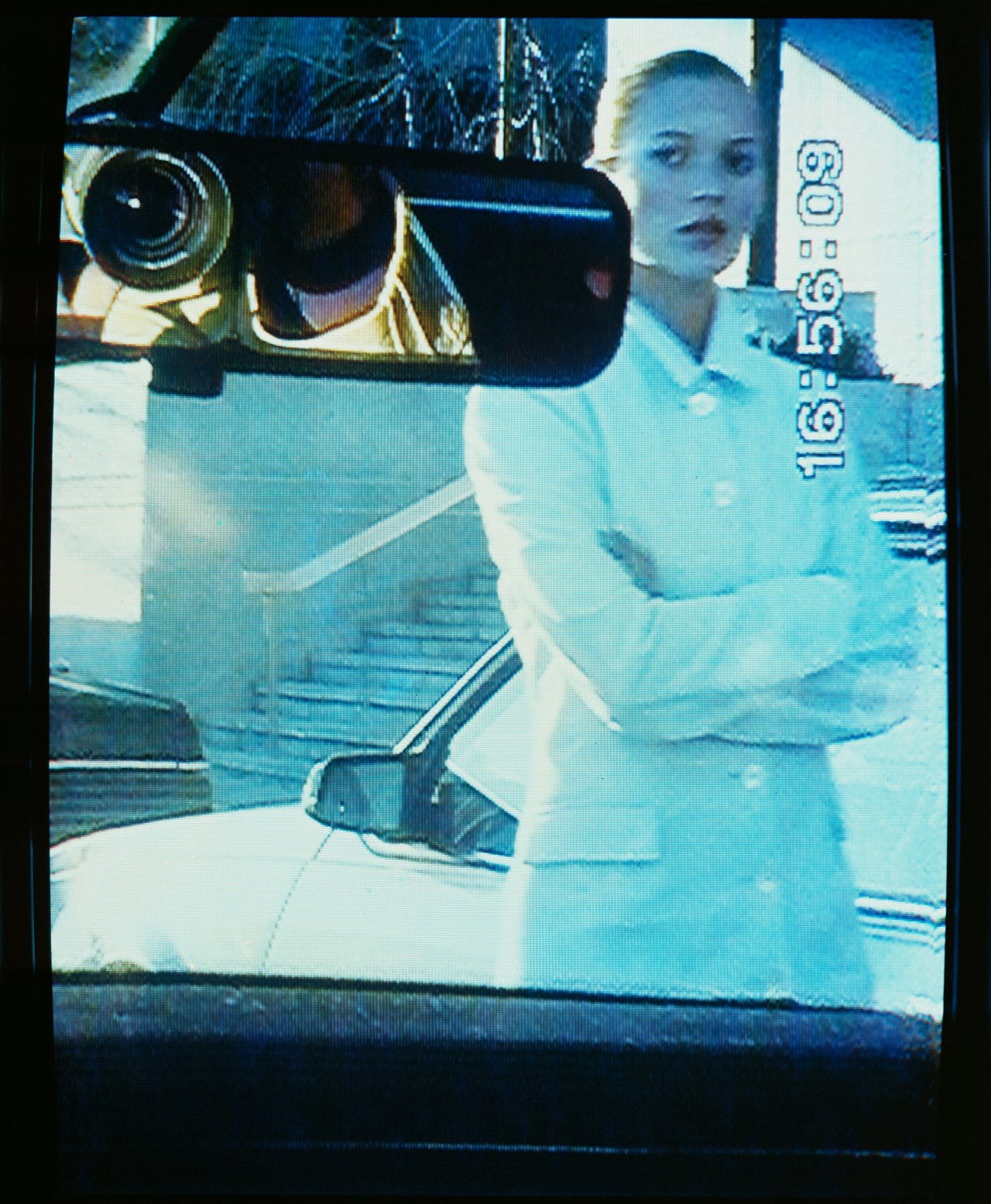
I’m definitely just at the point of feeling grossed out by any and all surveillance. You can probably relate. It feels like we’re being watched and tracked and recorded everywhere we go - because we are.
So-called law enforcement officers are stalking women with Flock camera networks, Kylie Jenner is hawking Meta glasses, and Ring (unsuccessfully) tried to make invasive technology cute by using hypothetical lost dogs. Alexa Chung has divided the fashion community with fit checks via front door camera - is it innovative, fashion-ifying surveillance culture, or a little bit of both?
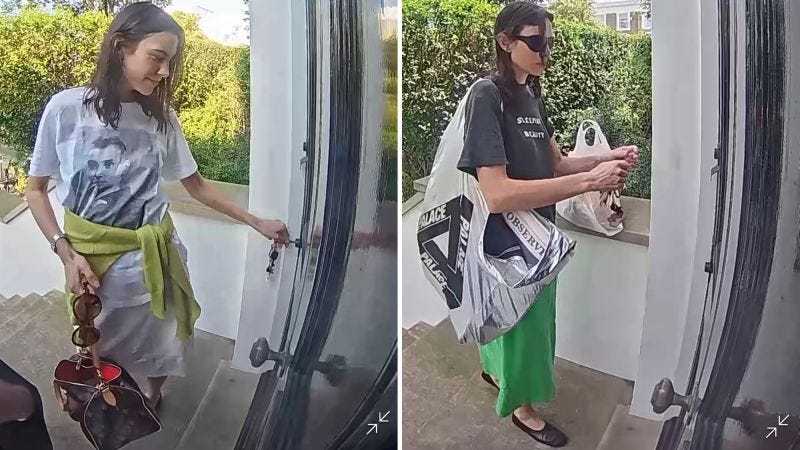
But what about safety? What about protecting our homes, our families, our businesses? How do we decide which versions of this technology are actually providing security, and which ones are just for stalking and misidentifying and data mining? It is okay to blast someone’s face to thousands of people (or more) because they did something that we deem deserving? Where do we draw the line between justice and vengeance?
My years in the vintage fashion industry have taught me that there are essentially only three options when your irreplaceable, agonizingly restored, one-of-a-kind inventory is stolen. Pick your poison:
A) You just accept the loss. Oftentimes, there’s simply not enough information available to pursue any kind of recourse. Sometimes I don’t go into my vintage collective for two weeks, and realize I have no idea how long a piece has been missing for, let alone when it was taken. Cameras glitch, thieves are sneaky, and there are little to no security measures at most markets or pop ups. Being stolen from really hurts, but sometimes there isn’t much to do besides shed a few tears and move on.
B) You call the cops. If the item was of substantial value, or in the rare cases that theft involves serious property damage or violence, you may choose to involve law enforcement. Insurance companies require a police report to file a claim, through coverage often doesn’t extend much further than repairing a broken door. Want to know how many small business owners I know that have successfully gotten back their inventory, or even just the monetary value of it, through police intervention? If you guessed 0, you win.
C) You take matters into your own hands. From what I’ve gathered in personal anecdotes, this is the only method that reliably gets results. Sometimes there’s a way to track someone down without crowdsourcing an ID, but blasting surveillance footage on socials really does seem like the most effective way to find a complete stranger in 2026.
Someday I’ll get permission from my fellow dealers to share an amazing story about how they trapped a notorious thief through Depop. Thousands of dollars of vintage designer inventory was returned, along with the full retail value for items that had already been sold, all thanks to the brilliance that is Motivated Women Sleuthing On The Internet.

Given the limited options and serious financial (and emotional) burden of theft, I find myself morally aligned with small businesses who choose to publicly post people that they’ve caught stealing on camera. I’m personally okay with some types of surveillance, with a few important caveats: consent, intent, and clarity.
When entering a private business, there’s not only a cultural and social expectation that monitoring might be in use, but the cameras and screens are (typically) openly placed and visible. We understand we’re being recorded in Whole Foods and Target, so that assumption could reasonably be made for a local consignment shop or vintage boutique. While this isn’t consent in its most explicit form, I do think openly recording the public areas of a business comes about as close to an unspoken agreement as you can get.
Meanwhile, that same implied consent would be much harder to argue by someone posting an iPhone video of a fellow shopper in that same store. “Private” front door cameras are one thing when you’re only capturing your own patio and driveway, but their reach often extends much further. What happens when you’re also monitoring strangers walking their dogs on public sidewalks, or you inadvertently capture your neighbor’s kids playing within the bounds of their own front yards?
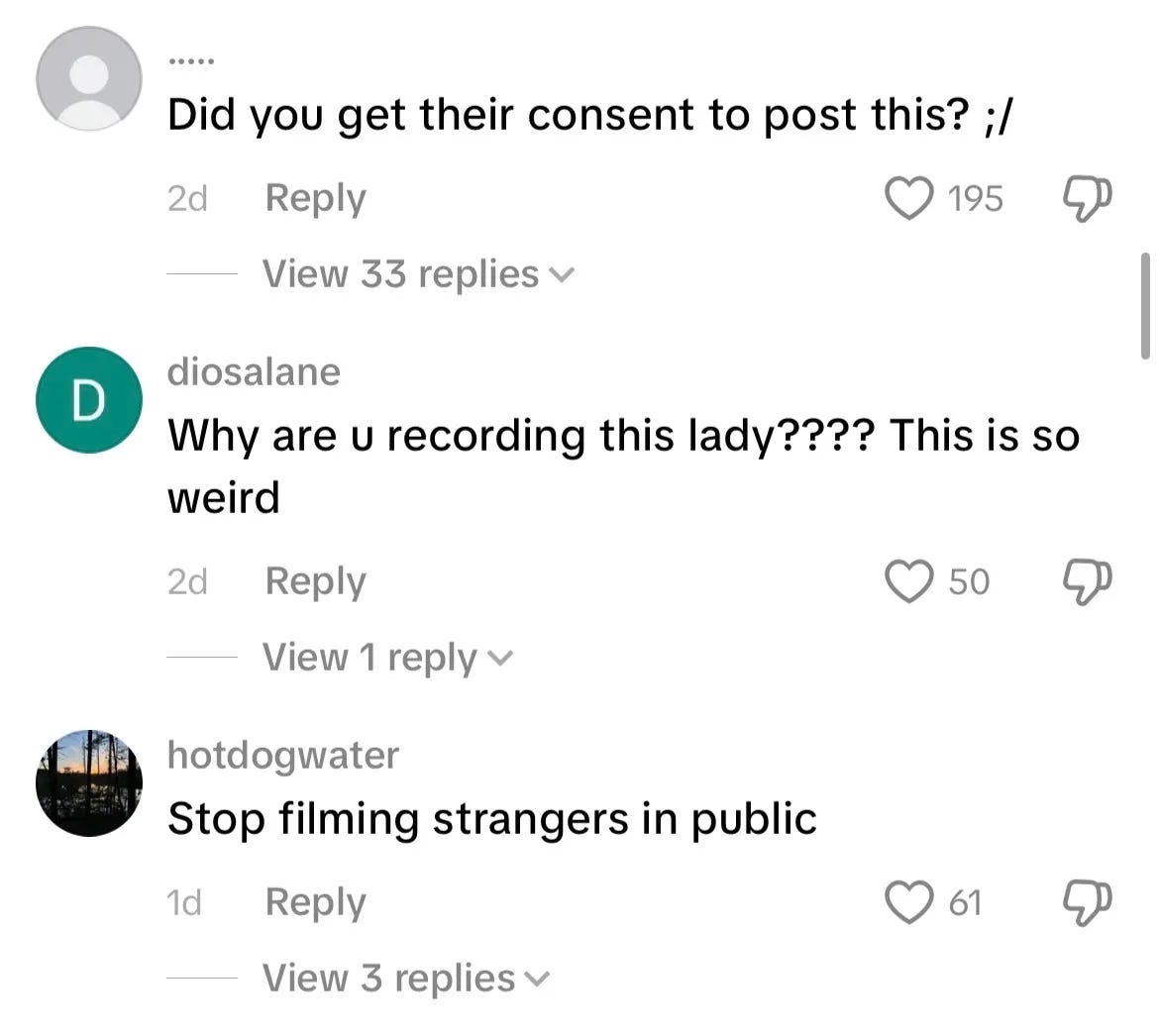
And then there’s intent: why are you posting this? For obvious reasons, people often find issue with non-consensual footage posted purely for engagement or entertainment. Best case scenario, it’s a video of something sweet, or funny. Worse case, someone is unwillingly being served up for ridicule or bullying. The intent behind publicly posting thieves is generally pretty straightforward, and most sellers are clear that the photos will be taken down if and when the situation is rectified.
I recently saw a shop’s carousel of camera footage accompanied by a harshly worded caption, referring to the shoplifter in question as an all-caps NASTY GREMLIN. At first I laughed, because stealing from a small business is 100% NASTY GREMLIN behavior. But then I scrolled the comments, and found a dozen or so people joining in with more insults about the thief’s appearance, remarking that she had to steal because her own clothing was so bad. While this sort of pile on is probably great for engagement, and undoubtedly feels pretty good when you’ve been violated, I’m unsure whether it’s actually helpful.
Is it possible that these kind of personal attacks make the offending party less likely to come forward? Does name-calling degrade the trust that your actual paying customers have in the integrity of your brand? While I fully understand (and very much give into) the inclination to shit talk, I wonder if this energy is best kept to the group chat. I don’t want to tone police my fellow dealers, especially when they’re rightfully feeling violated, but I do think that even perceived intent can often hinder best results.
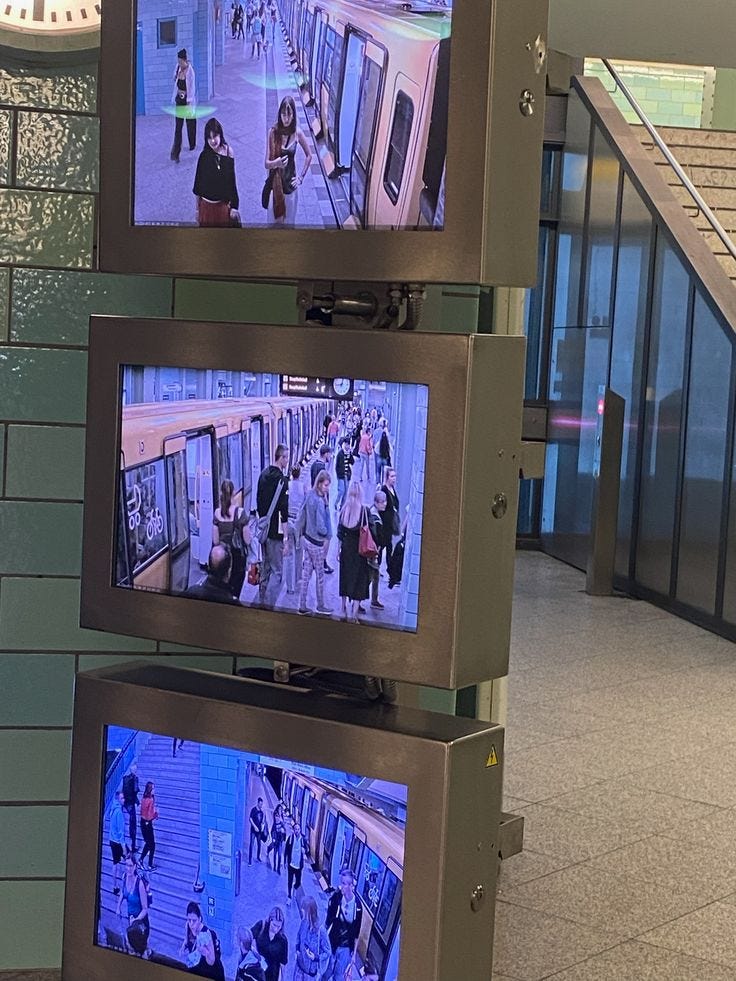
And lastly, and maybe most importantly, is clarity. How sure are you that the person you’re posting is, in fact, the person who stole? Sometimes ambiguous stills give me pause, especially when it’s clear that there were other shoppers in the store, and especially especially when white people are posting footage of POC. In the court of public opinion, it’s hard (if not impossible) to fully undo a wrongful internet accusation.
Anything less than absolute certainty should preclude you from blasting someone’s face online. If you don’t have clear footage of an item being taken off the floor and disappearing into a fitting room or being stashed in a tote or under a sweatshirt, proceed with extreme caution.


In 2001, Winona Ryder was arrested for shoplifting $5,560 of designer clothing from a Saks in Beverly Hills. Just one year prior, the 28-year-old actress had received her very own star on the Hollywood Walk of Fame, making the “fall from grace” angle of her shoplifting front-page tabloid news for months. Ryder was splashed across the press exiting the courtroom in a series of vintage-inspired looks from Marc Jacobs’ Fall 2001 collection - all the more titillating because a Marc Jacobs sweater was one of the items she was accused of stealing.
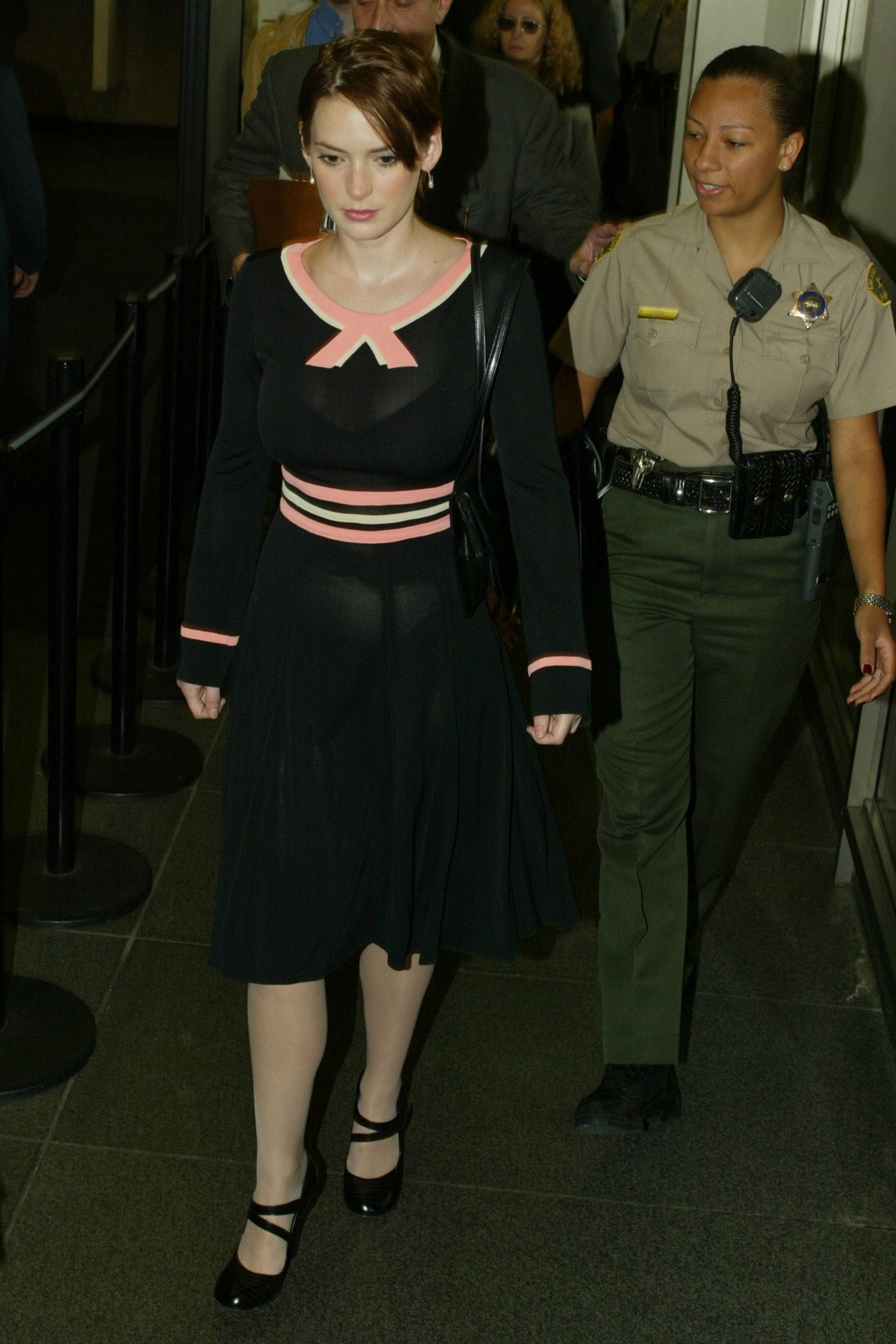
“She may be a shoplifter, but she has impeccable taste,” noted Robin Givhan in a piece for the Washington Post.
Jacobs himself embraced the irony of Ryder’s courtroom catwalk, utilizing the buzz to cast her as the star of his Spring 2003 ad campaign. The designer would later describe Ryder as “the ultimate muse,” continuing to invite her to model everything from his ready-to-wear line, to Marc Jacobs Beauty, to being the face of a handbag debut as recently as 2022.


Though Ryder’s legal troubles are understood to have resulted in her yearslong break from acting, the shoplifting saga has ultimately resulted in what many recall as Great Outfit in Fashion History (Fashionista, 2020) and “fashion lore” (Vogue Australia, 2022). Sure, someone like Winona Ryder gets the privilege of fame and wealth and beauty to eventually step back into the spotlight unscathed. But I’d also like to think that her forgiveness is also wrapped up in what and where she was stealing, not just in the simple act of theft itself.
The thing is, there isn’t actually much tangible harm in stealing from a giant department store chain, a luxury design house, or a corporation. Yes, it’s illegal. Yes, it’s “wrong.” But if nobody gets hurt and no unsuspecting salesperson faces the repercussions, what’s $5,560 to Saks Fifth Avenue anyway? The reality of the world is that these companies are actually the ones stealing, and largely getting away with it. Between wage theft, labor exploitation, plagiarism, and appropriation, I have little sympathy for the Marc Jacobs and Walgreens and Estee Lauders of the world.
Legally, I’m definitely not telling you to shoplift from corporations. But just know that if you do, I don’t judge you in the slightest. Fuck ‘em - just don’t get caught.


But stealing from a small business? Sorry, you really suck.
And if you’re (hopefully) caught on camera doing it, I think you deserve to be posted online.