


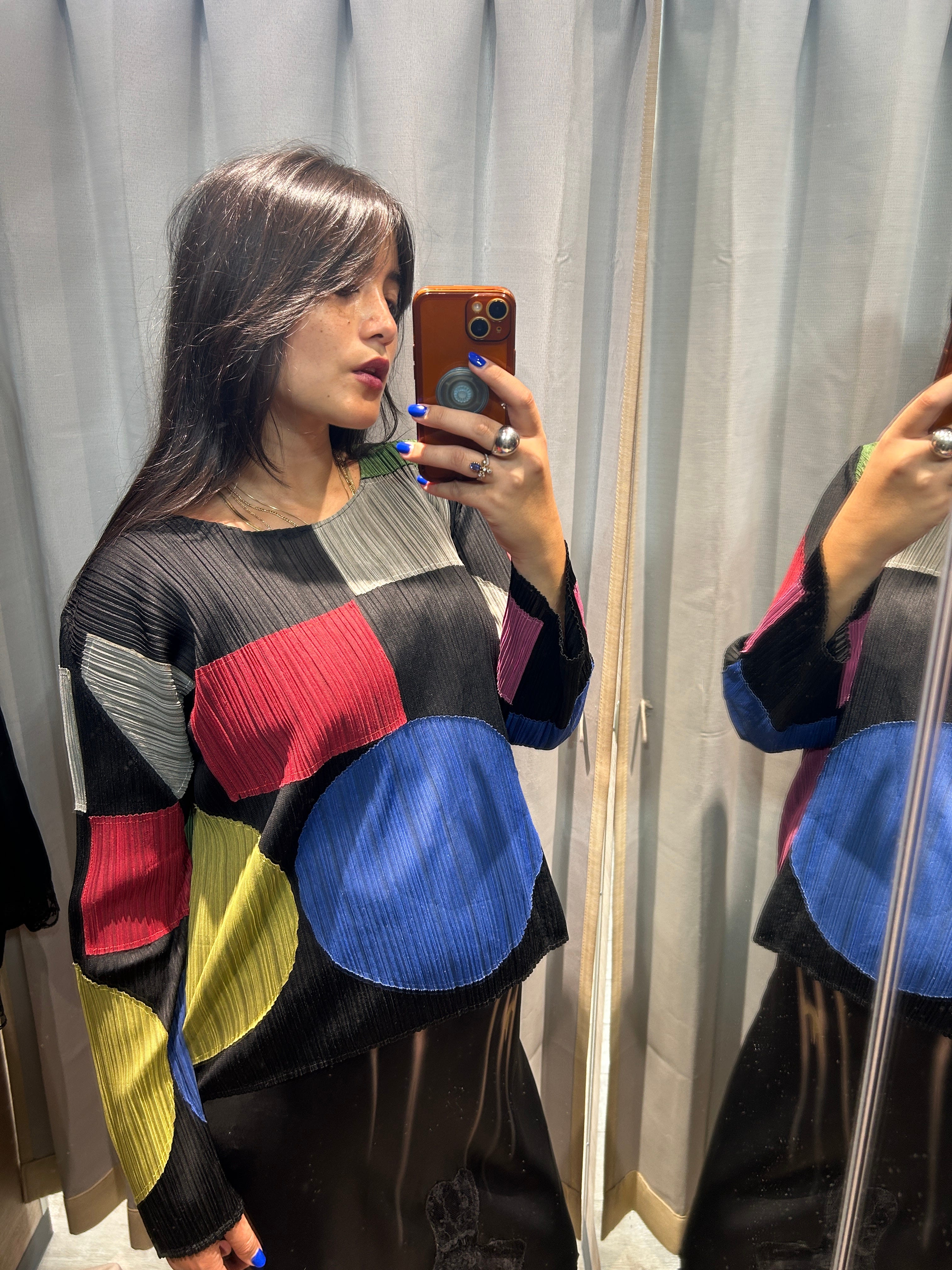
I don’t know if I’ll ever open a store of my own.
I think about it sometimes, like any small business owner probably does, but the realities of operating a brick and mortar in NYC are both daunting and very, very, expensive. But it is fun to dream, and one of my recurring fantasies is how to design the perfect fitting room. And there’s nothing quite like the experience of using a fitting room in Japan.
As it turns out, a few very small things can make a really huge difference for both the shopper and the store itself. Below, my definitive ranking of my favorite things you’ll find in most Japanese fitting rooms. I’ve also given each feature an American-ness score (out of five eagles) based on how likely I think is it that you would ever find any of these in a fitting room here in the US.
A Stool
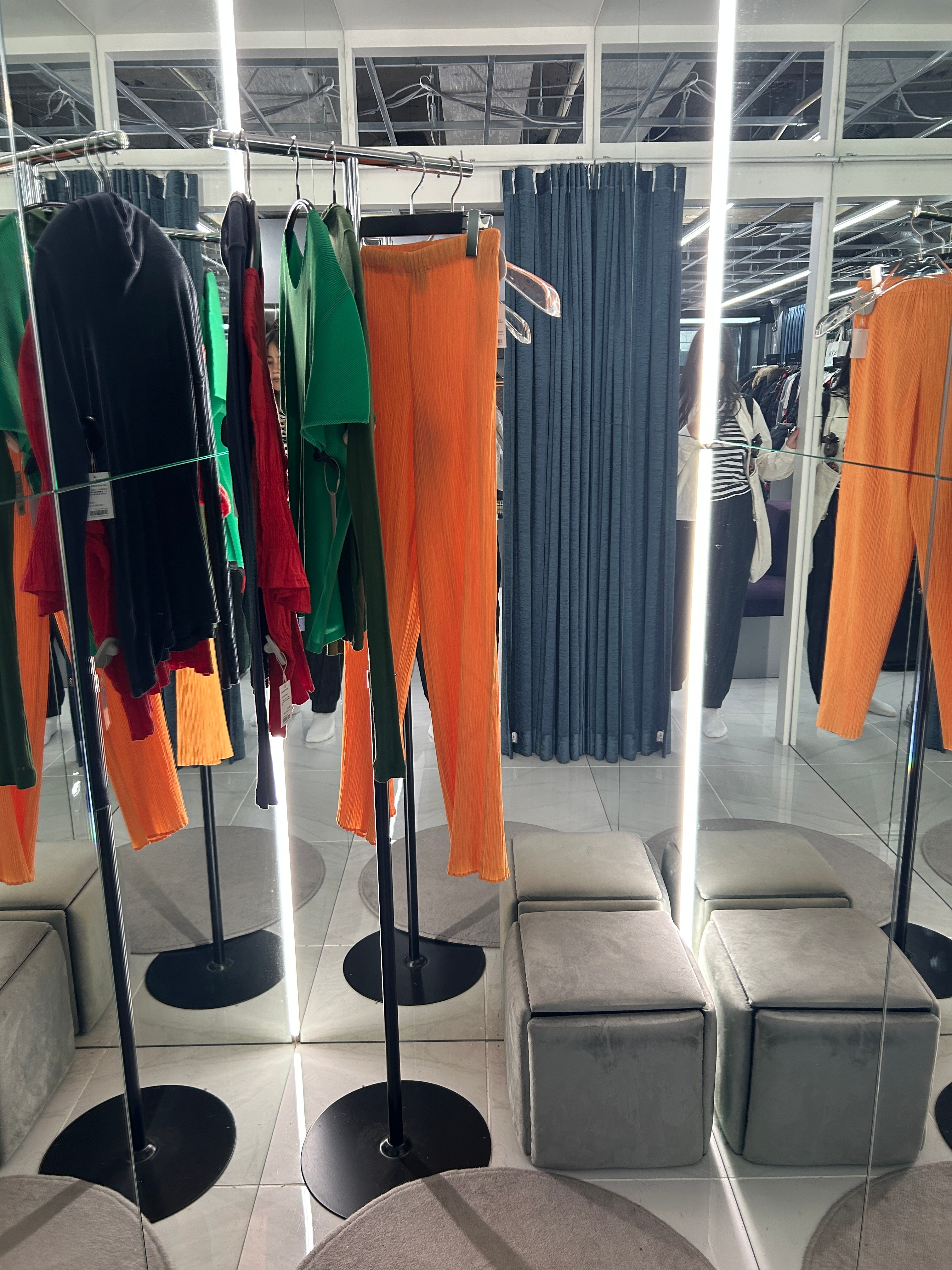
Obviously this one isn’t groundbreaking by any means. Most American fitting rooms have some kind of stool or bench, but not all American fitting rooms have some kind of stool or bench. In Japan, 100% of rooms I used had one, which was very much appreciated as a big pregnant lady that was usually carrying a bunch of shit around.
Usefulness: ⭐⭐⭐⭐
American-ness: 🦅🦅🦅🦅🦅
A Basket
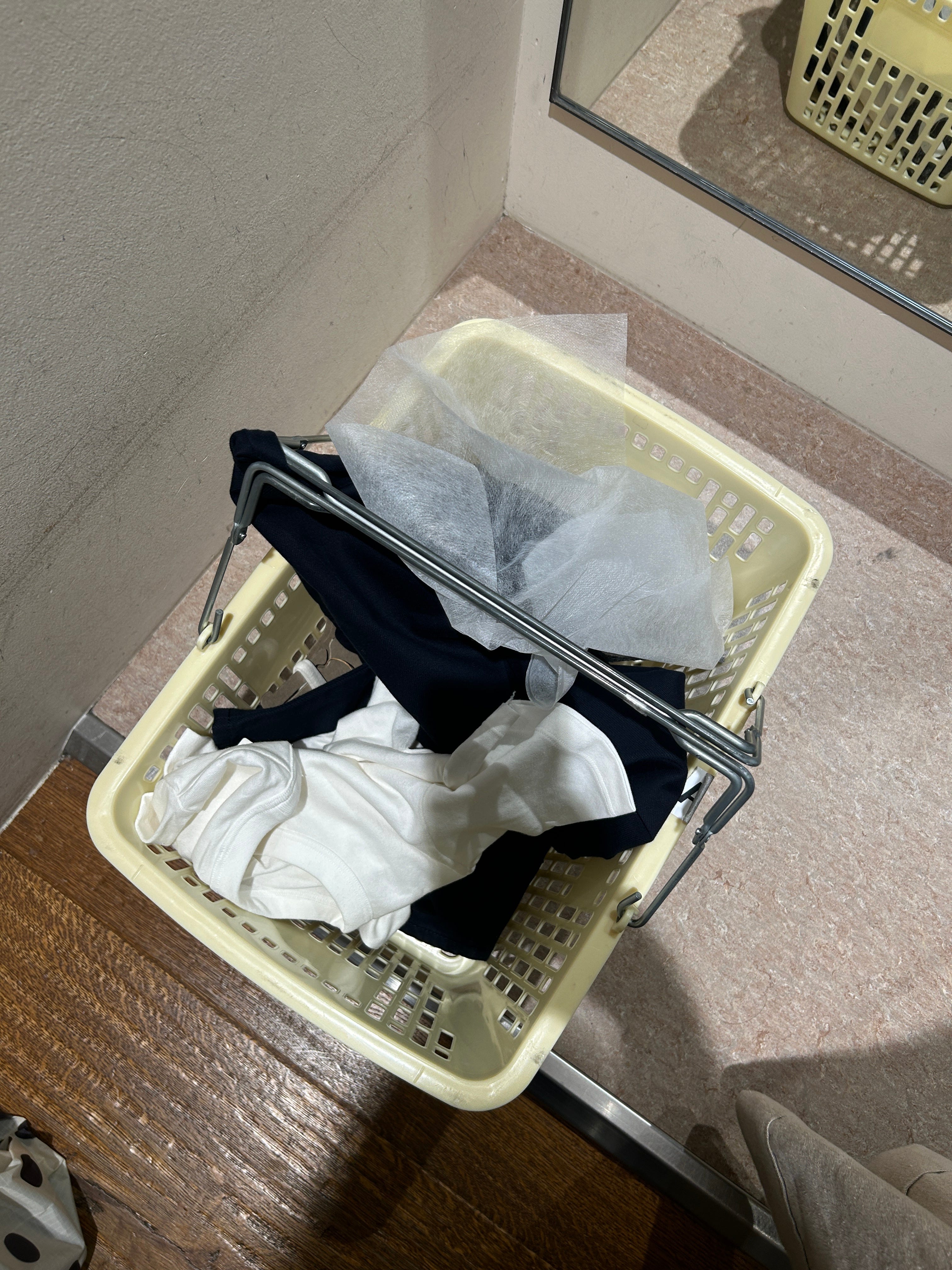
Japan is kind of obsessed with baskets. A lot of restaurants and bars have empty baskets beneath each seat for your bag/coat/whatever - it’s great. I wasn’t actually given a basket for most fitting rooms, but I did get one at Muji.
It was the day after I landed in Tokyo, and the checked bag with all of my clothes had somehow never left America. Thanks, United! Six months pregnant with nothing but track pants, a t-shirt, and (thankfully) two extra pairs of underwear, I went into the Muji fitting room with a giant pile of basics in three different sizes to get me through however many days it would take for my luggage to arrive at my parent’s apartment. The basket helped me more easily sort the nos from the yeses from the haven’t tried on yets without feeling like I was drowning in bralettes and cotton tees.
Usefulness: ⭐⭐⭐
American-ness: 🦅
Rails Instead of Hooks or Pegs
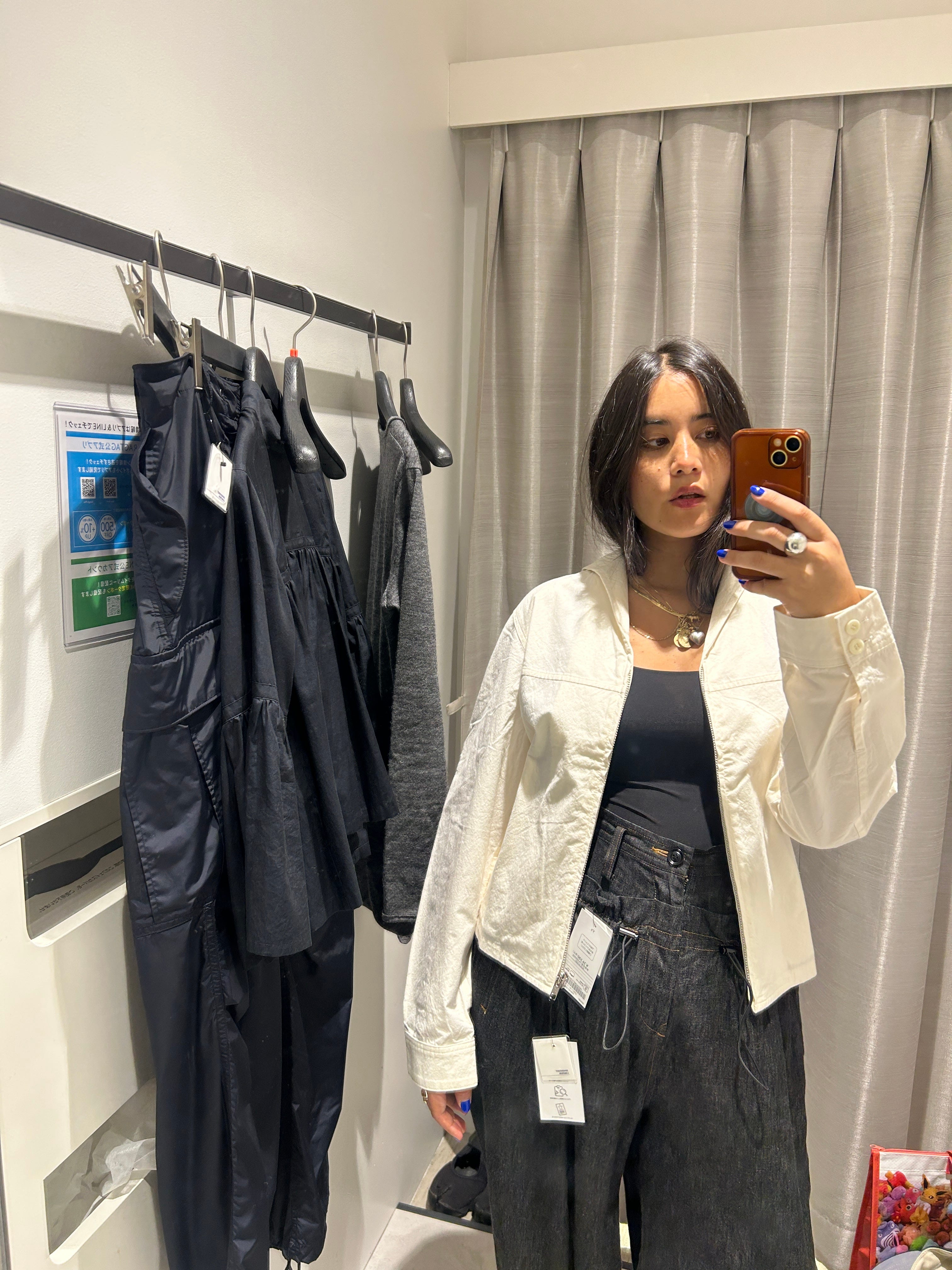
I understand why stores often opt for wall-mounted peg rails or hooks. They’re easier to install, take up less physical and visual space, and generally get the job done. But if you’re entering a fitting room with a purse, tote bag, shopping bags from other stores, and a coat, a few little pegs lose their utility pretty quickly. Add on a handful of garments to try on and suddenly you’re looking at shit flung all over. It can get messy and overwhelming, two things that immediately decrease the likelihood I want to stick around and try a bunch of stuff on.
As a retail worker, I also think that any lack of hanging space increases the chances that customers leave a mess. As much as I wish it weren’t the case, working customer service has really led me to believe that any amount of resistance generally pushes people to be lazy and disrespectful. Some people would probably be slobs regardless, but I do wonder if more open hanger surface would help…

Usefulness: ⭐⭐⭐⭐
American-ness: 🦅🦅🦅
An Empty Hanger


Almost every Japanese fitting room I used had a single empty hanger already waiting for me upon entry. This is to hang up your clothes while you try on, a generally unnecessary but lovely gesture that feels like a real sign of respect. Like, yes, I actually would love to hang my shirt up instead of letting it get crumpled and wrinkly in the corner. Thank you.
The hangers were also different from what was used on the floor (clear vs black, marked with a little ribbon) to clarify which was meant to stay in the room. Such a small thing that I know it makes it so much easier for the people working.
Usefulness: ⭐⭐
American-ness: 🦅
No Shoes Inside, Obviously
Japan is well known for being a shoes-off society, like most of East Asia, with genkan (sunken entryways) everywhere from museums to restaurants. Naturally shoes come off before stepping into a Japanese fitting room, which really begs the question: why are we wearing shoes in any fitting rooms? There’s a very high likelihood that you’ll be taking them off anyways to try on, so why would you stomp dirt around the room first? Even worse if it’s raining or snowing out - wet socks has be one of the worst sensory experiences I can think of.
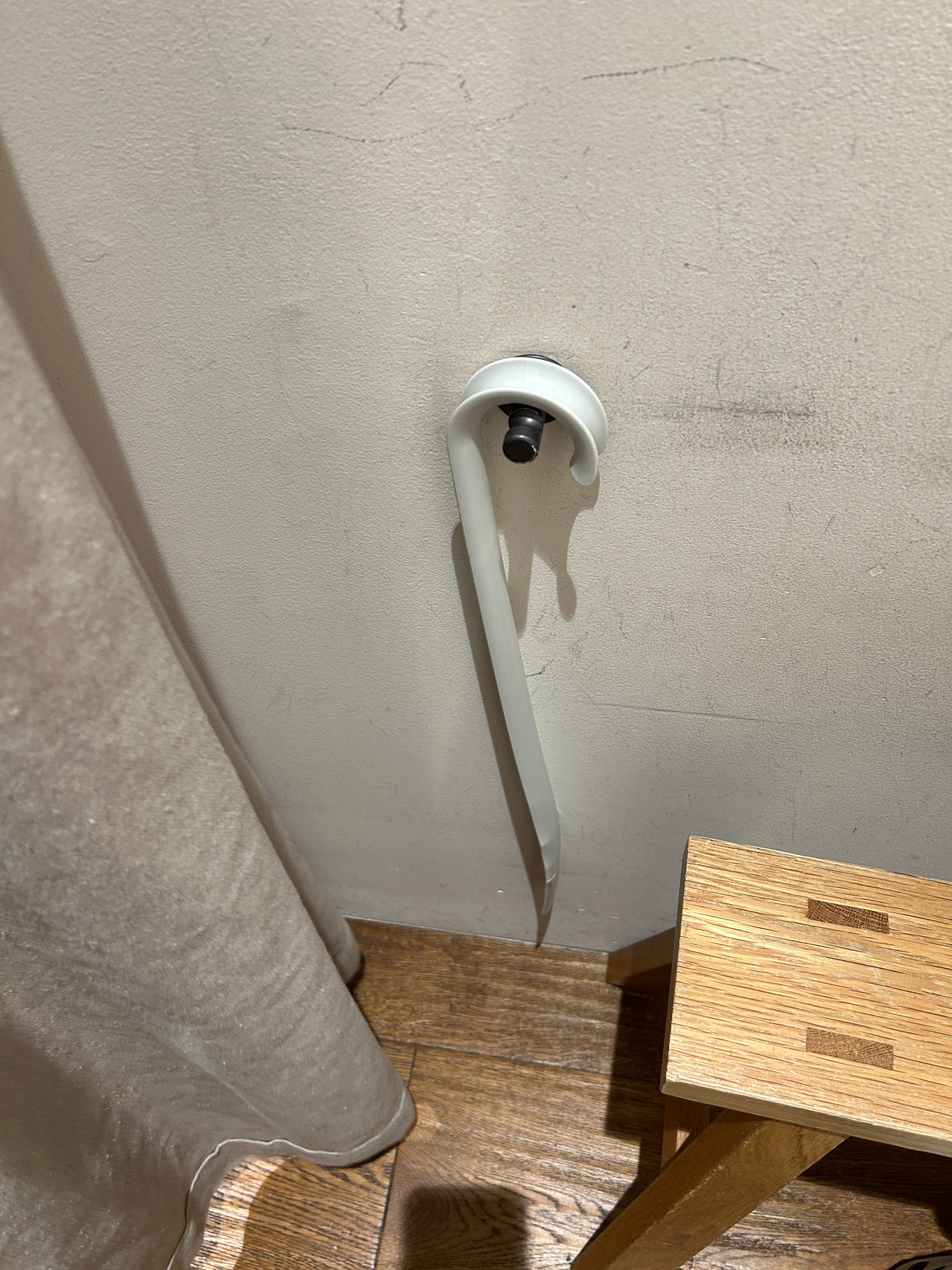
A visible pair of shoes also acts as a really helpful signal that a fitting room is occupied. I’ve both seen and been the person who accidentally pulls back the curtain on a half-naked stranger, yelling sorry! sorry! sorry! as I hastily avert my eyes and scurry away. I was working at a store with only one fitting room earlier this year, and I actually watched someone do this twice to the same woman! I’m not sure if she was truly that oblivious or if she was passive-aggressively trying to hurry the woman in the room along, but I was so uncomfortable for them both.
Usefulness: ⭐⭐⭐⭐⭐
American-ness: 🦅
Face Covers
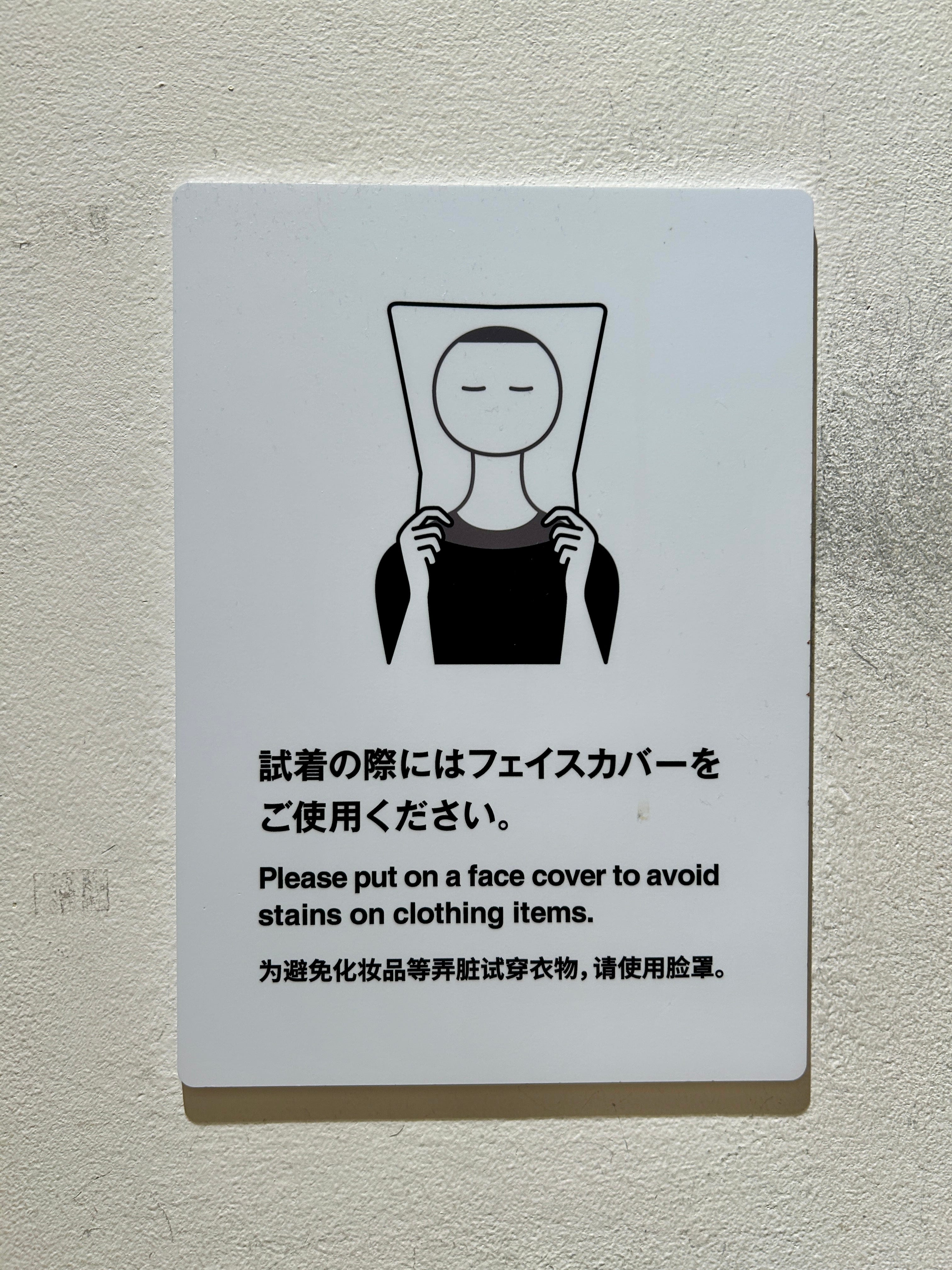
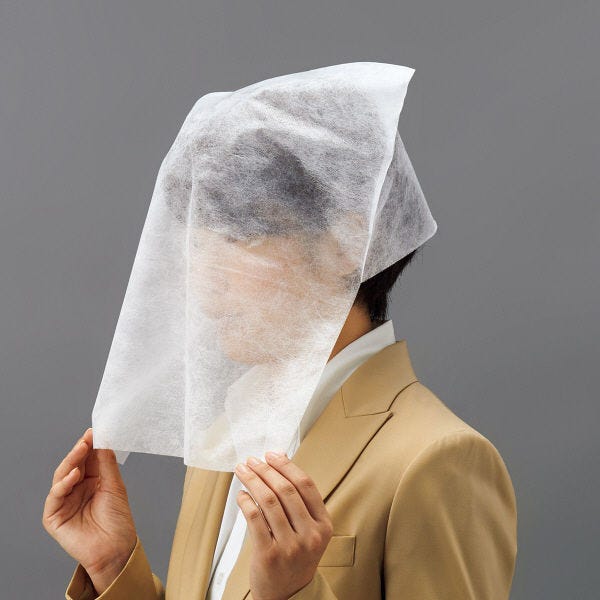
I think this is the least American fitting room feature because it has little to no benefit to the customer and almost everything to do with the clothing itself. Keeping inventory clean helps shop workers, maintains the value of the product, and protects the garment for a potential future buyer that may want that foundation-smeared top that you ended up passing on. The face covering isn’t exactly comfortable or convenient, so unless you’re really worried about smudging your makeup, there’s no truly selfish reason to use it.
If you’re shopping fast fashion, items are often marked damaged and simply disposed of if they’re stained, which is so wasteful. More valuable or one-of-one pieces like vintage either have to be discounted or cleaned (again!). You may not be suffering any consequences as the shopper, but either the planet or the seller pays the price for something that’s pretty avoidable.
Usefulness: ⭐⭐⭐⭐⭐
American-ness: 0 eagles. Even if these were provided, I don’t think people would use them :(


While I certainly found plenty of stuff on my trip that went straight from my suitcases to my closet, I definitely didn’t bring back 200-ish pounds of vintage and designer to keep all to myself!
If you’re a connoisseur of true vintage, come see me at Threadbare Show in DUMBO in two weeks! I scoured the Japanese flea markets for the most beautiful antique and vintage textiles, and I’ll be bringing velvet and lace haori, pants made of old silk kimono fabric, some of the best 80’s mohair I’ve ever seen, and much more.
If designer and luxury are more your speed, shop with me at Part Two in Chelsea on November 6th-8th. Use code STEVENS for a discount on your tickets :) I’ll be bringing gorgeous vintage leather and fur and a selection of vintage designer handbags alongside all of my favorite Japanese designer labels - Comme des Garçon, Yohji Yamamoto, tons of Issey Miyake, and lots more.


If you’re more curious about where exactly I found all of this amazing stuff, you’re in luck - I’ll be publishing my Tokyo vintage shopping guide soon!
We used to have a thrift shop that had a very worn vintage silk scarf in every room, and a little sign that told you how to use it. The staff said the scarves would sometimes go missing, but they were only a dollar each anyway. I miss that store!
Loved this! I agree with rails, a stool and taking shoes off! 💕🤘
Sorry about your luggage!